Bengaluru Drone Startup Airbound to Raise $30 Million in Greenoaks Round
- Bengaluru-based deeptech startup Airbound is set to raise $30 million, led by Greenoaks Capital with support from Lightspeed, marking one of India’s biggest early-stage drone tech fundraises.
- Founded by 20-year-old Naman Pushp, Airbound is developing advanced autonomous drones with blended-wing-body aircraft designs, aiming to scale logistics, defence and industrial applications.
- The rapid follow-on funding signals rising investor appetite for deeptech, as India positions itself as a growing hub for aerospace, robotics and frontier technologies.
Drone technology startup Airbound is poised to close a big new funding round as one of India's fastest-rising deeptech companies, reflecting both investor confidence in its vision and the broader shift within the country's startup ecosystem toward frontier technologies.
The round-expected to raise around $30 million in fresh capital for the Bengaluru-based firm-will be led by influential Silicon Valley investor Greenoaks Capital, with robust participation from existing backer Lightspeed Venture Partners and other investors familiar with the development.
Founded in 2023 by a then 20-year-old entrepreneur, Naman Pushp, Airbound continues to create waves with a variety of firsts in autonomous drone systems. At the young age of 15, Pushp's interest in drone technology started, igniting the foundation for creating next-generation drone hardware, long-range autonomous flight systems, and specialized aerial robotics.
Young though he is, Pushp has managed to garner a solid network of advocates in international tech and defense communities, with his R&D-first perspective being one of the key drivers for investors. This funding infusion comes only two months after Airbound's successful seed round in October, when the startup raised $8.65 million from marquee names including Physical Intelligence co-founder Lachy Groom, Lightspeed, and senior executives from companies such as Anduril, Tesla, and Ather Energy.
The rapid follow-on round indicates the momentum behind Airbound and a fast-growing appetite among venture capitalists for deeptech and hardware-centric startups-particularly in areas like autonomous logistics, robotics, aerospace, and defense technologies.
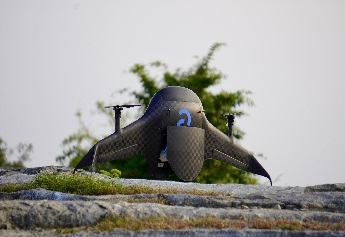
Airbound has targeted the development of autonomous logistics aircraft with advanced drone designs that deviate from conventional quadcopter architectures. A blended-wing-body, tail-sitter configuration allows for both vertical take-off and landing, together with efficient, airplane-like forward flight.
Constructed with lightweight carbon-fibre composites, these aircraft are engineered to extend the range of operations, enhance energy efficiency, and facilitate a greater payload capacity-those features highly important for scalable commercial and strategic applications.
While the company initially focused on healthcare logistics, including several pilot deployments related to the transport of medical supplies and diagnostic samples, Airbound ambitiously plans to expand into wider logistics markets by 2026.
Also Read: Atomberg Raises Rs 212 Crore to Scale R&D and Market Growth
This includes exploring integrations into digital commerce platforms like the Open Network for Digital Commerce-once known as ONDC-and enabling such services whereby customers and businesses can opt for drone delivery alongside traditional modes such as bike or van transport based on cost and speed.
According to industry sources, the new capital will be used to accelerate R&D on advanced drone platforms, scale manufacturing of high-end unmanned aerial vehicles, and expand hiring across engineering, avionics, and artificial intelligence systems. Meanwhile, Airbound wants to deepen partnerships in the defence, logistics, and industrial automation sectors-areas where autonomous aircraft could deliver real competitive advantages.
The startup is also in exploratory talks with major health care and logistics networks after piloting medical-grade drone delivery routes earlier this year. The importance of this funding round goes beyond Airbound's own balance sheet. It reflects a broader shift in both global and Indian venture capital-one that increasingly prioritizes deep tech and IP-heavy companies that can make a technological impact in the long run rather than short-term consumer plays.
India's policy environment, too, is in flux to accommodate such sectors, with changes in regulations easing drone operations to government initiatives aimed at spurring indigenous innovation in strategic industries. This combination of investor interest and policy support is gradually positioning India as an emerging hub for advanced aerospace and robotics startups.
If the deal closes as expected, Airbound will feature among the best-funded drone startups in India, solidifying its position at the bleeding edge of the country's aerospace innovation wave and marking a new chapter in how Indian deeptech firms attract and deploy global capital towards building future-ready technologies.